

Iran is facing what United States President Donald Trump is referring to as the ‘most crushing economic consequences’ against Tehran. This announcement comes from the president as Washington ramps up the pressure against a stubborn Iranian front, with the latest round of ceasefire talks apparently at a stalemate.
President Trump stated on Wednesday, via a post on his Truth Social account, that Iran has “failed to take the opportunity’ to enter into a deal with the United States, and so will face ‘warfare and isolation’ at unprecedented levels. To add severity to the situation he also makes clear that any country or nation that does business or enters agreements with the pariah country will face heavy sanctions.
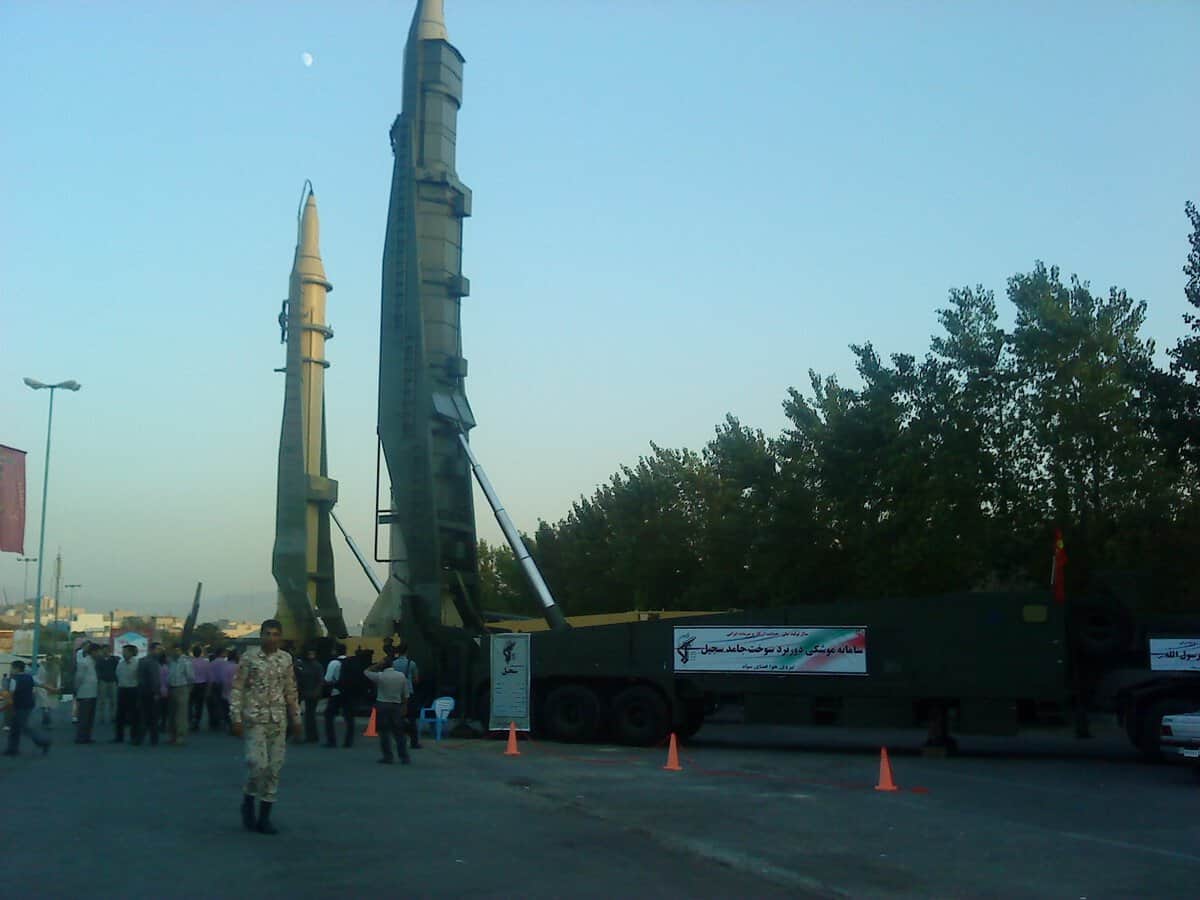
Iranian missile systems built with Chinese help Sejil 2 (right) and Qiam (left) at Tehran exhibition 2012. SOURCE: GETTY
According to his Truth Social rant, the administration has set its sights on anyone who provides a ‘lifeline’ to the country. This comprises various forms such as airports, financial institutions, government entities, cash transfers, ship registries, oil smuggling, exchange houses, front companies, and so on. In short, what the president is describing is an ‘ECONOMIC D-DAY’ for the IRGC and Iranian government, and he is calling for allies and friendly governments across the Middle East and the world to join the U.S. in this effort.
Operation Economic Fury 2.0?
From Iran’s perspective, this is nothing new. Back in February, Iran endured the economic pressure of Operation Economic Fury, right after the US-Israel War first kicked off. Even before this announcement, Iran has been operating under severe sanctions on its oil, finance, and shipping sectors. Naval blockades serve to cut off the Islamic Republic of Iran’s ports and oil tankers, blocking oil and general trade routes into and out of the country.
It is in this light that the country’s spokespeople respond with their usual bravado. IRIB, the state broadcaster, states that President Trump’s threats come on the heel of a ‘failure of military aggression’ and that this is not a ‘new development’ by any means. The Tasnim news agency reports that Tehran has become ‘very skilled at circumventing restrictions,’ and referred to Trump’s latest statements as ’delusional.’
According to many observers, the message in Trump’s posts might be more directed to the American public than America’s enemies. In light of the country’s growing opposition to the continuation of this entanglement, there might be credibility to this.
The China Connection
Middle East economics professor Nader Habibi, attached to Brandeis University, offers an additional perspective. According to him, the United States ‘encouraged or induced’ the United Arab Emirates to cut off trade and banking services to Iran. He references the phone call and conversations between Emirati National Security Advisor Sheikh Tahnoon bin Zayed Al Nahyan last week. Likely targets for the same may include Iraq, Turkey, and most importantly, China.
The managing principal at Obsidian Risk Advisor, Brett Erickson, putting pressure on China’s banks to cut off Iran might be the ‘biggest lever that Trump could pull.’ China and Russia are Iran’s largest and most consequential supporters, but the U.S. administration might be wary of straining relations with the Asian superpower by imposing sanctions on it for transacting with Iran.