

Flagged water supply concerns were ignored by officials who went on to approve mega industrial projects.
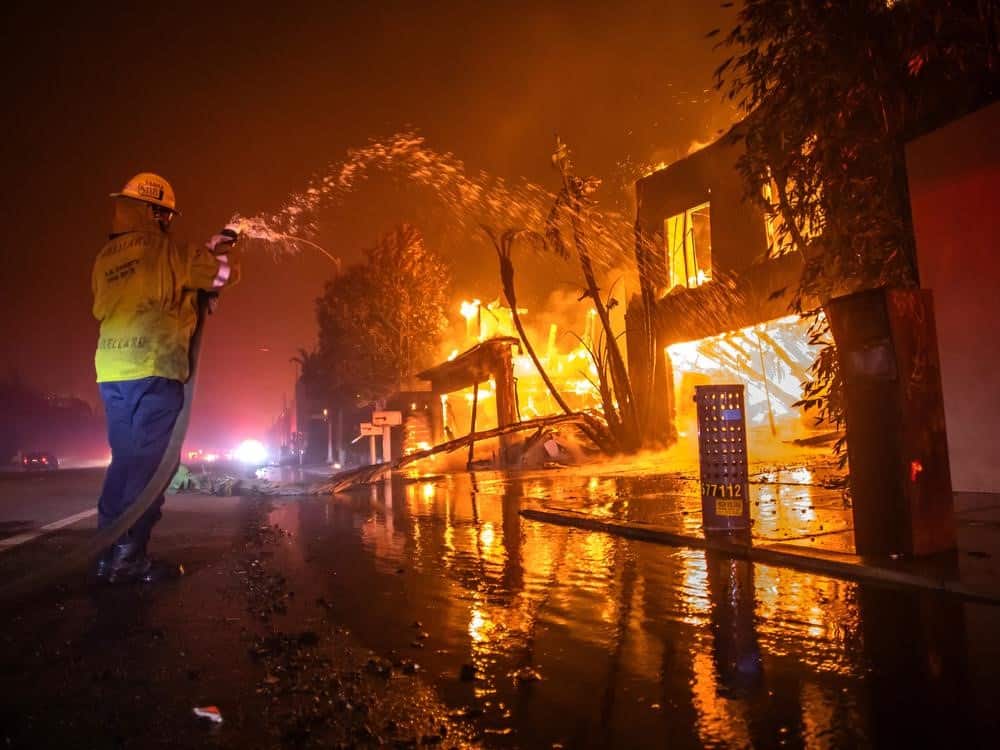
Firefighter battles one of the Georgia wildfires/ Getty Images
As wildfires rage in the south of Georgia, the camera turns to Temple irregularities that may continue to impact the city’s response to fires even in the future. The problem is low-pressure water systems.
A new report commissioned by the city has identified that its water systems have low pressure, confirming what residents have long suspected.
The analysis started in August 2025, led by the Planners and Engineers Collaborative. In their report, the engineering firm highlights that the water infrastructure falls below the standard requirements by the city.
The system is said to “not consistently provide the necessary pressures and flows for fire protection.” This reflects what firefighters reported last month on Enterprise Drive. While putting out a fire, the crews were heard on dispatch radio saying “not getting any pressure on this line” as the fire grew.
Eyewitnesses on Enterprise Drive report having heard the same statements from firefighters, confirming that the water pressure wasn’t high enough to put out the fire. PEC’s report is not the only one. Three independent firms have come up with similar findings after studying the water systems around Temple. The diagnosis is that the existing system lacks adequate capacity for fire protection.
Flow test results for hydrants throughout the city range between 418 and 699 gallons per minute and 20 pounds per square inch. In a few locations, flow rates fall below the momentum known to be effective for fire protection. This is the same for new and proposed development sites, where it’s been found that many will not meet code requirements for fire protection because of low water pressure.
Even more concerning, it’s become evident that city officials were aware of these concerns long before the March fire. The city had issued a moratorium to “investigate water supply issues before approving new residential projects” in January of 2025. While that happened, city leaders continued to greenlight new large industrial projects with total disregard for the risks. Approved projects include two sites covering 131 acres.
Development commissioner Karen Powell initially resisted the projects, but the council later approved them. Hunter Beckjordan, one of the firefighters who responded to the Enterprise Drive fire, later tried to warn city officials at a meeting in September. He told council members that the main challenge was that the hydrant on the street “did not provide enough pressure out of the hydrant itself.”
When asked about the matter, Mayor Michael Johnson declined to comment. Later, at a public meeting, when asked about why the projects were approved despite concerns, he simply replied, “We do not respond to any questions.” Residents are concerned about future developments in the city. New large-scale project approvals amid the persisting inadequacy of the water systems to provide fire protection do not just make sense.
A new simulation model commissioned by city officials for $40,000 analyzed the city’s water system and found areas of improvement. For now, officials say the moratorium for residential buildings will remain in place as they continue to analyze the system.