

This is a paid interview. The featured artist or their representative compensated Now Entertainment to be interviewed and published. The responses are the interviewee's own. Payment does not influence our editorial review, and we label all paid placements. Learn more in our Advertising Policy and Editorial Policy.
Opened in 2021 inside the historic James A. Farley Post Office building, Moynihan Train Hall is one of New York’s busiest transit hubs, with a constant flow of commuters, travelers, and people meeting friends beneath its skylit atrium. It is not an obvious place for a piano recital. For pianist Hanbing Wang, that is exactly the appeal. We spoke with her about performing in a space where no one is obliged to listen and about what classical music can be when it meets people in the middle of their day.
Performing in a train station is quite different from a concert hall. What was it like?
Wang: In a concert hall, the audience arrives ready to concentrate. A public space gives you no such guarantee. Some people may stay a few minutes; others might hear only part of a piece before moving on. As I put it, “You can’t assume that the audience already understands the language of classical music. Also, you can’t assume they’ll sit through the entire performance. That is hard, especially for people at a train hall.”
Did that uncertainty change the way you perform?
Wang: It did. I’ve learned to accept the sounds around me, the announcements, and the footsteps as part of the environment. Music doesn’t always need a perfectly controlled setting to make an impression.
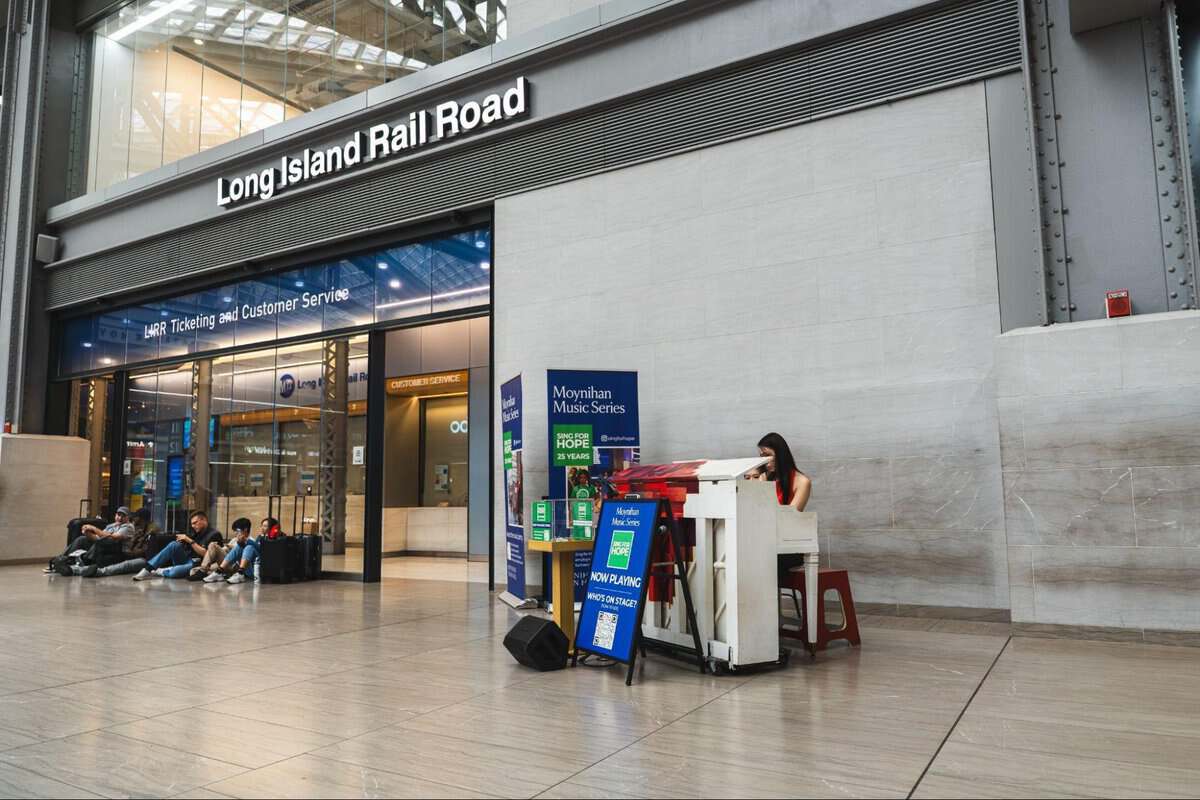
You chose Corigliano’s Etude Fantasy and Shostakovich’s Piano Sonata No. 2 for this performance. Why these two pieces?
Wang: I chose them myself. I was interested not only in their technical demands but also in how they might exist in a place as restless as Moynihan. “Both pieces have movement and tension; I think those qualities naturally belong to New York.”
Were you worried the music would become background sound?
Wang: That was exactly what I didn’t want. I wanted the music to interrupt the rhythm of the space, even briefly. “If someone is just passing by and hears something and thinks, ‘What was that?’ and stops for a while, I think that is meaningful.”
Classical music can feel like it belongs to a certain kind of institution or audience. Can a train station change that?
Wang: I think so. In a place like Moynihan, the music meets people where they already are. Someone might stop for two or three minutes before catching a train. That may not be a complete concert experience, but it can still be a genuine musical encounter.
You’ve taken part in festivals such as SoundSCAPE and New Music On The Point. How have those experiences shaped you?
Wang: They were very important. I had the chance to work directly with composers and discuss the ideas behind new works. A score stops being something fixed and finished. You take part in discovering how a piece should sound and what its smallest musical gestures might mean.
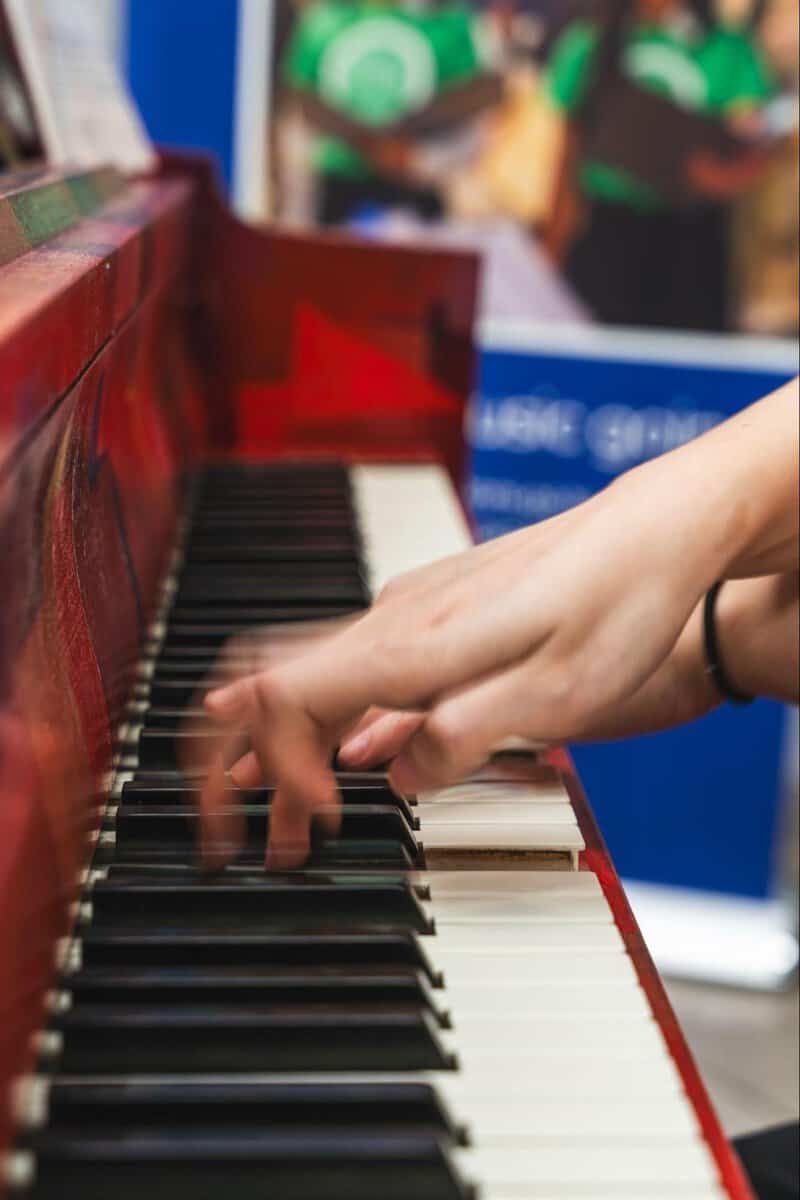
So is working with new music a break from tradition?
Wang: Quite the opposite. The piano can be traditional or modern, solitary or collaborative. It can carry music that has existed for centuries while also becoming part of music being created now. I think tradition is worth understanding deeply precisely because it gives a musician the freedom to explore beyond it.
What do you hope someone takes away from hearing you at Moynihan?
Wang: My hope is fairly modest. Someone hears the piano. Someone stops. For a few minutes, the pace of the station changes. “That itself is already meaningful.”