

More than 42 million Americans have already cast ballots ahead of Tuesday’s midterm elections, which will decide whether Republicans keep control of Congress for the last two years of President Donald Trump’s term. Early voting is running well above the pace of most past midterms, according to University of Florida Election Lab data. Texas and Georgia are drawing the most attention, with Senate and governors races that both parties see as competitive. Election Day is Nov. 3.
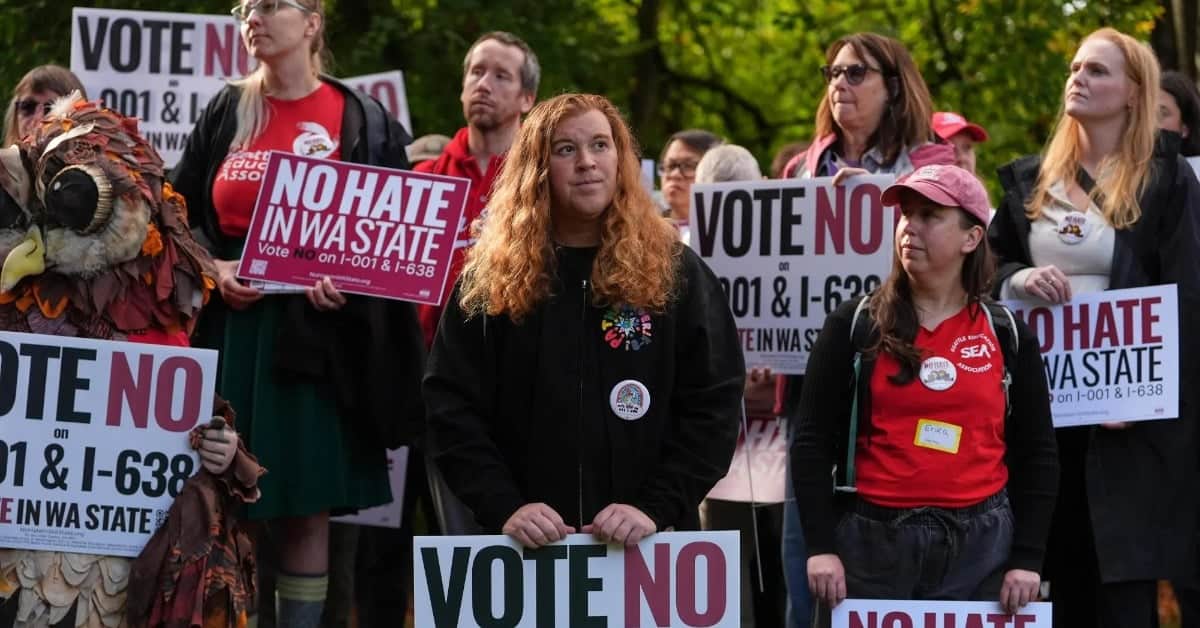
Protesters in Seattle attend the ’No Hate in WA State’ rally in defiance of multiple issues on the ballot, such as Initiative 638, banning trans people from girls’ sports
Photo: Lindsey Wasson/ AP Photo
Key facts
- Election Day: Tuesday, Nov. 3
- Early votes cast: More than 42 million as of Thursday afternoon (UF Election Lab via CBS)
- Daily pace: Four to five million ballots per day
- Texas: 5.8 million+ votes, about 1.75 million ahead of 2022
- Party registration states: 44% Democratic, 31.2% Republican, 24.7% unaffiliated
- Senate math: Democrats need a net gain of four seats; a 50-50 split leaves Republicans in control because of the vice president’s tie-break
- House: Republicans hold a narrow majority; Kalshi’s betting market gave Democrats 91% odds as of Oct. 21
- History: The president’s party lost House seats in 20 of 22 midterms since 1938
- Final days: Early voting is tapering off as states close it
A Early Voting Begins.
The Election Lab’s Michael McDonald told reporters that four to five million early votes have been cast each day. Overall turnout appears on track to beat 2018, which set a record for a midterm. Minneapolis said it had already set an early-voting record for a non-presidential year, with 52,661 ballots accepted as of Wednesday, up from 52,313 in 2018.
Texas has the highest above-average turnout so far. More than 5.8 million ballots had been cast there, about 1.75 million more than in 2022, McDonald said. Some heavily Hispanic border counties are on pace to beat their 2022 totals in the early vote alone.
Voter Turnout Different in Various States.
The partisan picture is less clear. In states that register voters by party, which is roughly half the country, Democrats account for 44 % of early ballots, Republicans 31.2% and unaffiliated voters 24.7%, according to Thursday’s figures. Republican numbers are broadly similar to 2022, while Democratic and unaffiliated early voting is up. States like North Carolina, Georgia and Florida, which record race, Hispanic and Black participation is up while white turnout is level with 2022.
In Texas, 51% of the early vote came from voters modeled as likely Democrats and 45% from likely Republicans, a swing from 2022. In Georgia, the split was 54% to 38%. Democrats are also turning out more of their less-frequent voters, especially in Texas. ABC cautioned that the data cannot show how anyone actually voted. Early voting in both states ended Friday.
In Texas, Democrat James Talarico is challenging Republican Ken Paxton for the Senate, and the governor’s race is also close. Trump rallied there twice on Tuesday. In Georgia, Democratic Sen. Jon Ossoff faces Rep. Mike Collins, and former Atlanta Mayor Keisha Lance Bottoms is running against Republican businessman Rick Jackson for governor.
Voters in many states will also decide ballot measures. Proposals in California, Colorado, Nevada, North Carolina and Arizona would add voter ID requirements, and six states would require citizenship to vote in state elections. Four states have measures on sex-based eligibility for school sports. Taxes are on the ballot too, including California’s proposed 5% tax on billionaires’ wealth and a Washington repeal of its tax on million-dollar incomes. Abortion measures are on the ballot in Virginia, Idaho, Nevada and Missouri.
Election rules are also in dispute. A federal judge on Wednesday rejected the Trump administration’s bid to make California separate out mail ballots from about 20,000 people it claims are not citizens.
Why this matters
Early turnout is a strong sign of enthusiasm, but it doesn’t predict the result. The Election Lab notes that officials can’t begin counting ballots until Election Day, and its party figures reflect registration, not votes. Reports indicate that much of the surge comes from people who would have voted later anyway. Republicans may be waiting for Election Day, so the final turnout mix is still unknown.
The two chambers present different tests. Historical patterns and betting markets favor Democrats in the House, though mid-decade redistricting in several states has reshaped the map and made their path harder. The Senate map is tougher, with Democrats needing to flip several Republican seats while defending their own. That makes Texas and Georgia especially important, and it’s why both parties are spending so heavily there.
The surge among Hispanic and Black voters in states that record race, and the gains in Hispanic-majority border counties in Texas, are worth watching. They could signal a shift or simply reflect which voters are acting early. The ballot measures add another layer: voter ID, taxation and reproductive rights proposals could reshape state law whatever happens in Congress.
